User Feedback Vector Illustration: Graphics & Illustrations
First Impressions: Warm, Human, and Purposefully Expressive
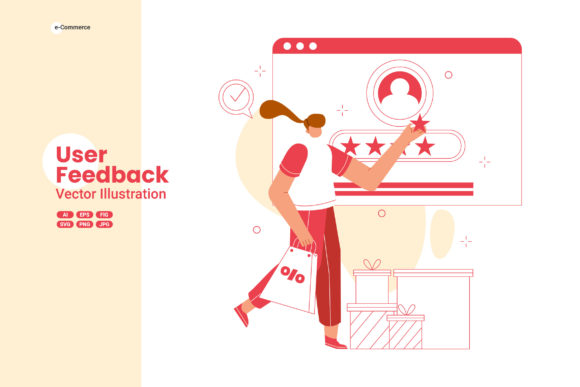
When I opened User Feedback Vector Illustration, my immediate reaction wasn’t “cute” or “trendy”—it was “authentic.” This isn’t a sterile clipart icon of a speech bubble or a flat emoji-style face. It’s a carefully composed, user feedback-themed illustration with unique and modern style for websites, presentations, infographics, and more. You can easily resize and change the colors depend on your needs. Highlights 100 vec—yes, it’s fully vector-based, clean, and layered. The linework has subtle variation, the facial expressions feel nuanced (not exaggerated), and the composition balances openness with intention. For a client project like a handmade skincare brand launching a customer story campaign, this asset instantly elevates the visual tone from generic to genuinely empathetic.
Fits Like a Well-Tailored Brand Element
I tested User Feedback Vector Illustration across real-world applications: a Canva template for an Etsy seller’s email newsletter, a product mockup for a print-on-demand tote bag line, and a hero graphic for a small business’s seasonal “Why Our Customers Love Us” landing page. In each case, it functioned as more than decoration—it reinforced emotional trust. On packaging design, it worked beautifully as a secondary graphic beside ingredient callouts. As part of a branding kit, it paired seamlessly with both sans serif fonts (for clarity) and soft script fonts (for warmth), though it clashed slightly with rigid geometric display fonts. Its versatility makes it a strong candidate for a design bundle targeting creative marketplace buyers who need cohesive, commercial-ready assets.
Where It Shines: Contexts That Amplify Its Strength
- Large layout areas: Scales flawlessly to full-width website banners without pixelation or loss of detail.
- Product mockups: Adds narrative depth to digital ads and Instagram posts—especially when placed near testimonials or review snippets.
- Printable designs: Printed crisply at 300 DPI on greeting cards and wall art; SVG export allowed precise color matching to brand palettes.
- Social media graphics: Works especially well in Pinterest pins and Instagram carousels where human-centered storytelling drives engagement.
- Cricut projects: Clean paths cut cleanly on vinyl—ideal for sticker design or custom t-shirt design with layered text overlays.
Where to Proceed Thoughtfully
User Feedback Vector Illustration is not a universal plug-in. At under 24px height, fine details (like subtle shading in facial features or delicate hand gestures) begin to blur—so avoid using it as micro-UI icons or tiny app interface elements. It also demands breathing room: drop it into a crowded flyer with dense typography or busy photo backgrounds, and its emotional resonance gets lost. I’d hesitate to use it in minimalist corporate identity systems or high-end luxury packaging where restraint and silence are key. Likewise, in low-contrast scenarios—say, light gray on off-white—it risks fading into visual noise. Always preview it against actual background swatches, not just white canvas.
Design Impact Beyond Aesthetics
This isn’t just about looking good—it’s about shaping perception. When placed beside real customer quotes in editorial design or blog visuals, User Feedback Vector Illustration strengthens visual hierarchy by guiding the eye toward human voices—not just products. It boosts audience engagement by signaling that the brand listens. For a handmade business or local event organizer, that emotional cue builds credibility faster than any stock photo. But it only works if it supports, not competes with, your core message. I found it strengthened brand consistency most when used consistently across touchpoints—same color treatment, same scale relative to typography—and weakened it when inconsistently recolored or stretched across formats.
Practical Designer Notes Before Client Use
- Test it in black and white: Does the shape hold up? (It does—the silhouette remains legible.)
- Check contrast on both light and dark backgrounds: I confirmed full transparency in the included PNG design and crisp edges in the SVG design.
- Preview at small and large sizes: At 800px width, expressive details pop; at 40px, simplify usage to silhouette-only mode.
- Place it on real mockups: I dropped it into a Shopify product page and a Mailchimp template—both looked polished and intentional.
- Test print quality: No banding or aliasing on matte paper or sublimation transfers.
- Review file formats: Includes AI, EPS, SVG, and high-res PNG—ideal for both web design and commercial print workflows.
- Inspect layer naming and grouping: Well-organized vectors made quick color swaps in Illustrator effortless.
- Confirm commercial licensing: Yes—it’s cleared for use in client work, including Etsy product listings, print-on-demand, and digital ads.
A Strategic Creative Design Asset—Not Just Clipart
Let’s be clear: User Feedback Vector Illustration isn’t filler. It’s a considered graphic design asset built for intentionality. For designers crafting brand identity for small business branding—or content creators building social media graphics for a digital product launch—it delivers mood, meaning, and flexibility. It bridges the gap between functional marketing visuals and emotionally resonant creative design. Whether you’re developing a Canva template for coaches, designing a printable wall art set for teachers, or refining packaging design for a craft-based subscription box, this illustration adds quiet confidence—not clutter. Used thoughtfully, it becomes part of the story, not just the scenery.